Study Abroad Tips for Parents – How to Let Go Without Losing Your Mind

The real guide for parents of college students studying abroad in 2026
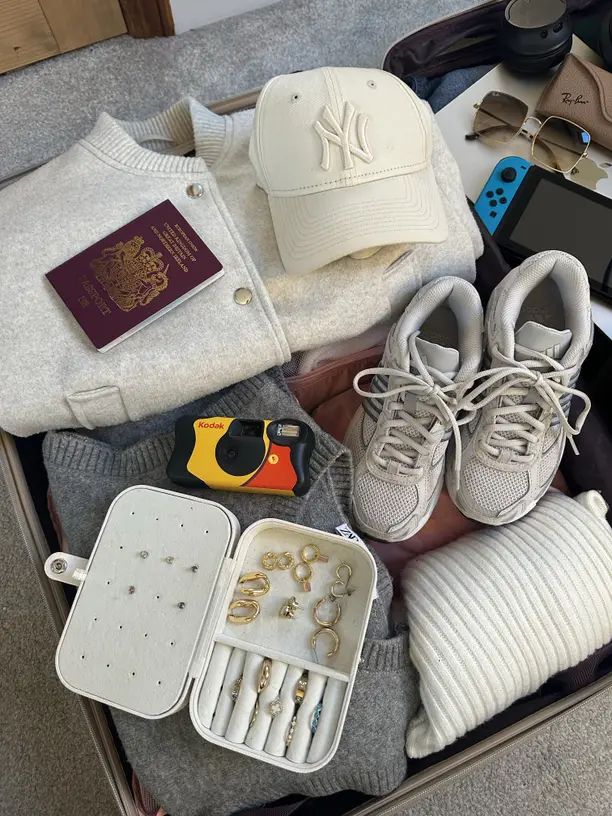
Let’s be real. You helped pack the bags, memorized the flight number, and low-key stalked the weather app for a city you’d never thought about before last semester. You did everything right. And now your kid is somewhere in Europe, or Southeast Asia, or South America and your phone has been suspiciously quiet for three days.
No one prepared you for this part.
Study abroad is one of the most transformative things a college student can do. It’s also, for the parent of a college student studying abroad, a masterclass in letting go. This guide is for you. The one holding it together at home, trying to be supportive without being that parent. Trying to trust the process even when the process looks a little unhinged from the outside.
You’ve got this. Here’s how.
Study Abroad Tips for Parents: How to Support Without Hovering
1. The Silence? It’s Actually a Good Sign
Here’s what nobody tells you in any study abroad parent guide: fewer texts usually means things are going well. Your college student studying abroad is out there living their life. Making friends, figuring out the metro, staying out later than you’d like to know about. The quiet isn’t a red flag. It’s the whole point.
Try reframing it. Instead of why haven’t they texted try they must actually be doing it. Because they probably are.
Pro tip: agree on a loose check-in schedule before they leave, once or twice a week, whatever works for your family. That way the silence in between feels normal instead of anxiety-inducing. For both of you.
2. Ask Better Questions
When you do connect, the questions you lead with matter more than you think. “Are you safe?” and “Are you eating?” are very parent-coded and tend to get a quick yes and nothing else. Open-ended questions actually get you the good stuff.
Try these instead:
- “What’s the most exciting thing that happened this week?”
- “What’s something that felt hard that you figured out anyway?”
- “Okay but what’s the food actually like?”
- “Did you try anything new?”
These signal that you’re genuinely curious about their experience, not just running a safety check. And honestly? They usually lead to the conversations you actually wanted.
3. The Messy Moments Are the Point
There will be a missed train. A budget spiral that requires an awkward call home. A week where they’re homesick and overstimulated and fully convinced they made the wrong choice. These are not failures. These are literally what study abroad is for.
The kind of resilience your student is building right now, solving problems in an unfamiliar place, in a language that might not be theirs, without you one call away, that’s the stuff that sticks. It cannot be taught. It has to be lived.
Your job in those harder moments isn’t to fix it. It’s to listen, remind them they’re more capable than they think, and put the laptop down before you start looking at flights.
4. The Highlight Reel Is Not the Full Story
Their Instagram will look incredible. Every weekend a new city, every photo golden hour, every caption radiating main character energy. And some of it will be real! But not all of it.
Study abroad also includes boring Tuesdays, grocery runs, regular stress, and stretches of time that don’t make the grid. That’s not a problem, that’s what actually living somewhere feels like. Encourage your student to be present in the ordinary moments, not just the ones worth posting. Those are often the ones they’ll remember most.
Study Abroad Safety Tips for Parents: What to Actually Worry About (And What to Let Go)
Having a list of worst-case scenarios running in the back of your mind is basically the parent experience. Here’s how to channel that without spiraling.
Before they leave, make sure they have:
- A copy of their passport stored separately from the original
- Travel insurance that covers medical emergencies and trip interruptions
- The address and number of the nearest U.S. embassy or consulate
- An international phone plan or local SIM sorted before landing
- At least one emergency contact who isn’t you: a friend, program coordinator, or RA
Encourage them to:
- Register with the State Department’s STEP program (Smart Traveler Enrollment Program) it’s free and means the embassy can reach them if something actually goes sideways
- Keep you loosely in the loop on where they’ll be week to week, not their every move, just a general sense
- Trust their gut. If something feels off, it probably is. No experience is worth overriding that instinct
Let go of: Knowing everything. Your student is going to do things you wouldn’t have green-lit, go places you’d have worried about, and make decisions that are entirely their own. That is not a failure of your parenting. That is literally the goal of it.
Study Abroad Budget Tips: Have the Money Talk Before It Becomes a 2am Crisis Call
Nothing derails a semester faster than a money mismatch, when expectations and actual budget don’t meet until someone’s overdrawn in a foreign country. Have this conversation early and make it specific.
Set a real monthly budget together and include the things students always underestimate: weekend travel, eating out, concerts, the spontaneous train to somewhere cooler. Those add up faster than the big planned stuff.
Be clear about what you will and won’t cover. Medical emergency? Obviously yes. Last-minute trip to Mykonos? That’s on them. Being explicit before they leave saves everyone an awkward negotiation mid-semester.
Suggest a simple tracking habit. It doesn’t have to be complicated. A quick weekly check-in with themselves on what they spent is enough. Some students find it genuinely eye-opening in a way that no budgeting lecture ever was.
Build in a small emergency buffer. A phone gets lost. A train gets missed and a last-minute hotel happens. A small fund, that both of you agree is only for genuine emergencies, can be the difference between a funny story and a stressful one.
The goal isn’t to control how they spend. It’s to set them up to make their own calls confidently, without running out of money before finals.
A Note for Everyone
Study abroad isn’t just about where your student goes. It’s about who they become while they’re there. The confidence that comes from navigating a new country solo. The perspective shift from actually living somewhere different. The resilience built through independence and yes, through the occasional missed train and homesick Tuesday.
A few weeks in, the novelty wears off. That’s not a problem. That’s where the real growth starts.
Trust it. Trust them. And for what it’s worth, sending them out there was the right call.
You did good.
Real Life Co. is here for the parents figuring it out in real time…one semester, one text, one deep breath at a time.