The Desk Setup That Survives Finals Week: A Study Station
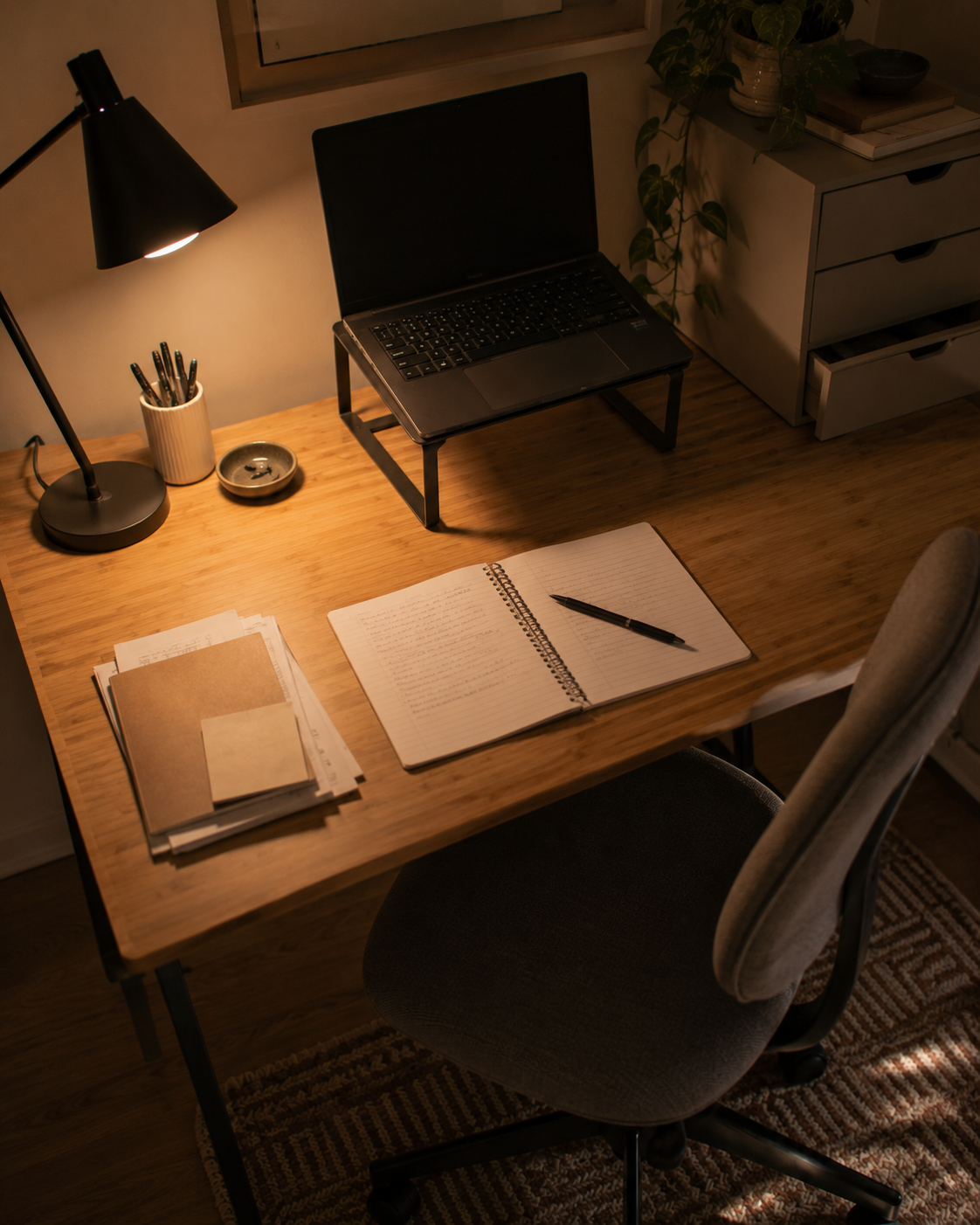
Most student desks fall into one of two categories. The first looks great on TikTok, matching aesthetic accessories, a candle, a color-coordinated pencil cup, and falls apart at hour three of a study session because nothing is actually positioned for extended work. The second is a bare surface with a laptop on it, functional but uninspiring, which means you avoid sitting down at it until you absolutely have to.
The desk that survives finals week is the third option: built for function, still good-looking, and set up before you need it so the setup itself is not the problem in week twelve.
Here’s what that looks like.
The Chair: The Highest-ROI Item on the List
Most students are studying in a dining chair, on a bed, or on a couch. All three cause the same problem: after ninety minutes your lower back has an opinion, and that opinion distracts you from whatever you’re supposed to be reading.
A proper desk chair is not glamorous. It’s also the single most effective investment in your ability to study for long periods, which is the entire point of a desk setup.
The Branch ergonomic chair is the answer at a price point that makes sense for a college student who will use it for two to four years. Adjustable lumbar support, armrests that move, a seat that reclines slightly rather than forcing you into a rigid upright position for hours. It comes in neutral colorways that read as furniture rather than office equipment, which matters if the chair is going into a dorm room. This is the splurge on the list. It earns it.
If you sit at a desk for any significant stretch of time, buy the chair first. Everything else builds on top of it.
The Light: Not the Overhead, Not Your Laptop Screen
Dorm overhead lighting and most apartment overhead lighting is designed for visibility, not for extended task work. It’s diffuse, often too bright or too yellow, and it puts light on the room rather than on what you’re actually looking at. Studying in overhead light for three hours produces a specific kind of eye fatigue that makes the next hour harder than the previous one.
A dedicated task lamp positioned at the side of your workspace, at roughly eye level with your work surface, does two things: it puts light exactly where you need it and it reduces the contrast between your screen and the surrounding room. That contrast is what strains your eyes over a long session.
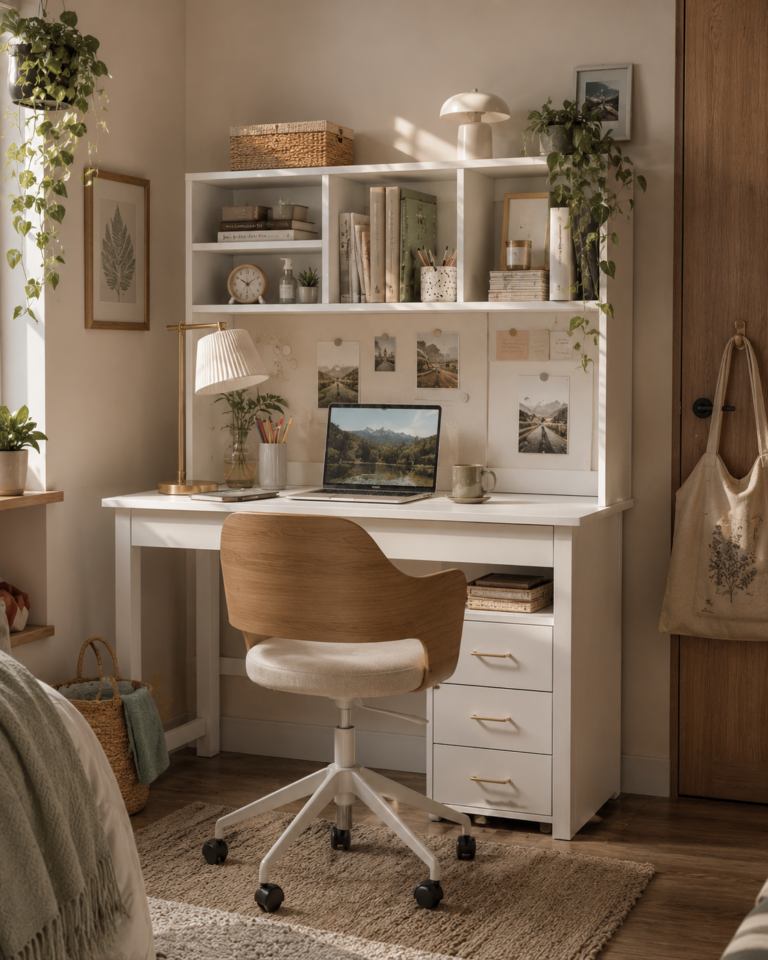
The Crosby Schoolhouse desk lamp is the one. The Schoolhouse aesthetic means it looks like a lamp someone bought intentionally rather than a utilitarian metal rod, and the Threshold price point means you’re not paying for the aesthetic at the expense of everything else. Adjustable neck, warm-to-cool color range, fits on a standard desk surface without taking over the space.
Turn off the overhead when you sit down to study. Use the lamp. The difference in how long you can concentrate is noticeable within a week.
The Screen: Eye Level, Not Lap Level
The average laptop screen, sitting flat on a desk, puts your gaze downward at about a 30-degree angle. Over two hours that angle taxes your neck and upper back in ways you feel the next morning. Over a finals week of those sessions, it compounds.
A laptop stand raises the screen to eye level and changes the ergonomic picture entirely. The STXND laptop stand does this without taking up meaningful desk space, it’s the kind of accessory that reads as part of the setup rather than a piece of equipment you bolted onto it. Use a separate keyboard with it if you have one. If you don’t, even just raising the screen reduces the strain enough to matter.
The Surface: Clear Enough to Work On
A cluttered desk is a decision tax. Every item that doesn’t need to be there is something your eye lands on and processes as a small interruption. The goal isn’t a spotless minimalist surface, it’s a surface where the things that need to be there are organized well enough that they’re not competing for your attention.
Modular desk drawers solve this without requiring you to think about it too hard. The Like-it drawers are a Japanese organization product that stacks and customizes, you pull out exactly what you need, close it, and the surface stays clear. What stays on the desk: the lamp, the laptop and stand, whatever you’re actively working with. Everything else lives in the drawers.
For a deeper look at surface organization by category, the desk edit has the full breakdown.
The Setup As Infrastructure
Finals week does not reward last-minute desk assembly. The students who have the easiest time in week twelve are almost never the ones who studied the most in week twelve, they’re the ones who built the conditions for studying earlier, when conditions were still easy to build.
The chair, the light, the screen position, the clear surface. None of it is complicated. All of it compounds over a semester. Set it up in August, use it through December, and let the setup be the last thing you’re thinking about when the exams start.