
Dining Hall Hacks: The Stations Most Students Walk Past
The hot entrée line is where most students go first, every day, sometimes twice.
It makes sense. It’s the most obvious thing in the room, steam trays, recognizable food, a clear signal that this is where you get a meal. But it’s also the most crowded, the most inconsistent, and on the nights when whatever’s in the tray doesn’t appeal to you, the default response is to pile it on anyway or give up and leave.
Every dining hall has other stations. Most students walk past them. Here’s what they’re missing.
The Salad Bar Is a Full Meal
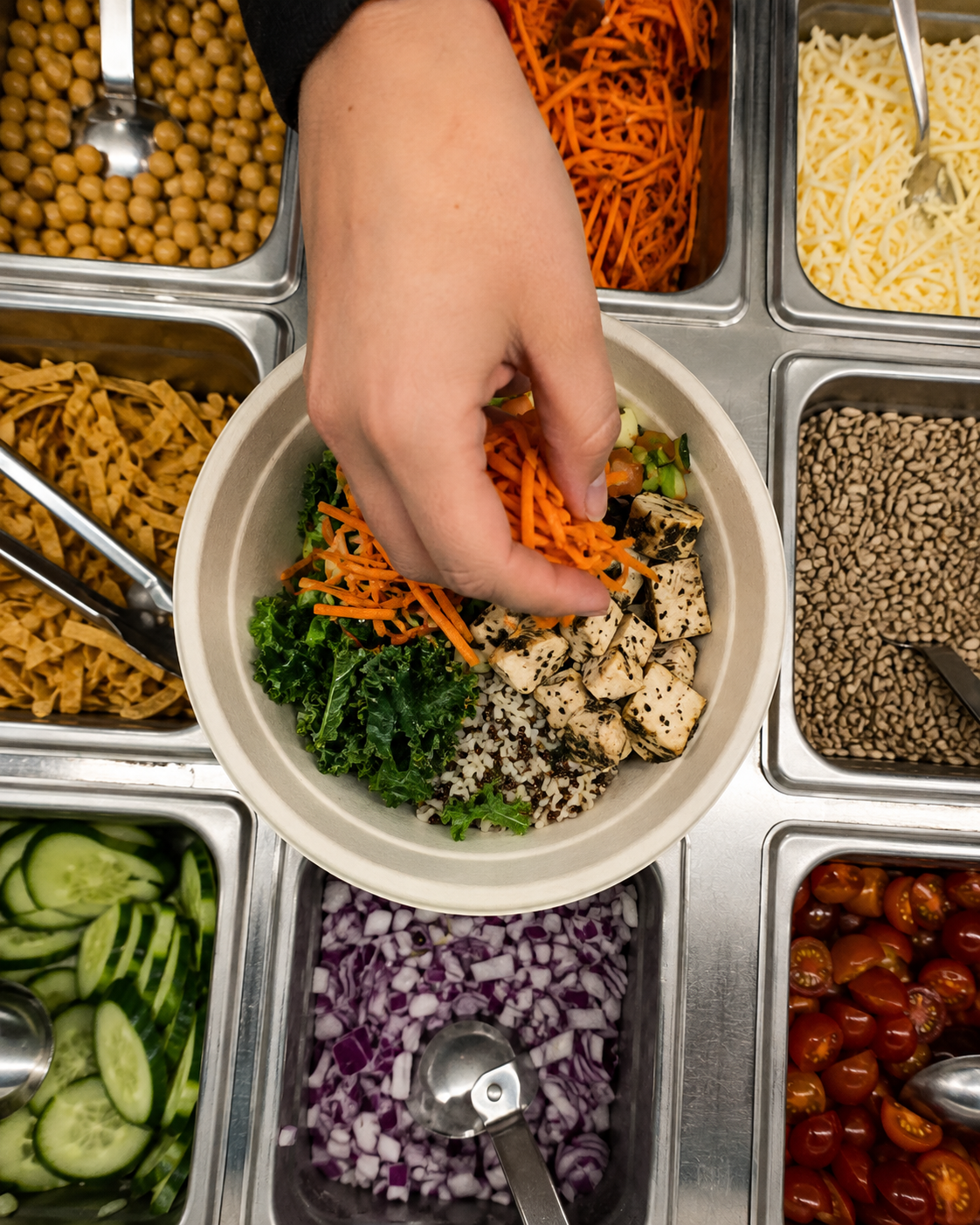
The salad bar gets used as a side or a guilty addition to the plate. Students walk by, grab some lettuce, and go load up at the hot station.
Built correctly, the salad bar is the best station in the dining hall.
The base is just greens, but the toppings are where the meal gets built. Look for: hard-boiled eggs (protein, almost always there), chickpeas or kidney beans (protein and fiber), shredded cheese, sunflower or pumpkin seeds (healthy fat and texture), any roasted vegetables, and at minimum a grain if one is available alongside. Add a dressing with some fat content, olive oil, a creamy dressing in a small amount, because fat helps your body absorb the fat-soluble vitamins in the greens.
Built this way, greens, a protein source, a fat source, some seeds or crunch, the salad bar is a complete and genuinely satisfying meal. It’s also consistent. The salad bar looks roughly the same every day, which makes it reliable on the nights when the hot food is something you don’t recognize.
The Breakfast Station After 8am
The breakfast station gets abandoned by midmorning. Students who have an early class come through, grab something, and by 9am the waffle iron and the oatmeal bar feel like yesterday’s news.
Come back to them.
The oatmeal station is one of the best nutritional options in the dining hall and one of the most underbuilt. Most students take oatmeal and add brown sugar or maple syrup. The move is different: load it with protein and fat add-ins. A spoonful of peanut butter (if available on the condiment bar), a handful of walnuts or almonds from the nut station if there is one, banana slices or whatever fruit is available. This version of oatmeal keeps you full through a two-hour lecture in a way that the sweetened version doesn’t.
The yogurt parfait bar, Greek yogurt, granola, fruit, is another breakfast station that most students treat as a snack rather than the protein-forward meal it actually is. Greek yogurt has roughly 15–20 grams of protein per serving depending on the brand. Build the parfait first and then supplement with whatever else you’re eating. Don’t relegate it to a garnish.
Hard-boiled eggs, when available, are worth grabbing even if you’re going to the hot breakfast station for something else. They’re portable, dense in protein, and the kind of thing you’re glad you have at 11am when class runs long.
The Deli Station as a Protein Plate
Most students use the deli station for sandwiches. The station is designed that way, the bread is right there, the condiments are right there, the setup implies a sandwich.
Ignore the implication.
The deli meats, cheeses, and any other proteins at the deli counter can be used as the protein component of a meal built from other stations. Take a few slices of turkey or chicken, skip the bread, and use the deli as your protein source alongside a full bowl from the salad bar or a serving of grains from the hot station. This combination, deli proteins plus a substantial salad bar base, is one of the more reliably satisfying meals the dining hall offers, available at almost every lunch and dinner regardless of what’s in the hot entrée trays.
If the sandwich route does appeal, the build matters. Load it with protein (double the deli meat if the serving looks small), add greens and any vegetables available at the station, and use a condiment with some fat content rather than just mustard. A sandwich built this way functions as a complete meal rather than something you’re hungry again from two hours later.
The Soup Station
Students tend to dismiss the soup station as a starter. It’s not always worth their time, watery broth soups don’t do much.
But when the soup is legume-based or protein-containing, lentil soup, black bean soup, chicken noodle, minestrone with beans, it’s one of the most efficient sources of protein and fiber in the building. A full bowl of lentil soup has as much protein as a serving of chicken. It’s hot, it’s filling, and it doesn’t require any assembly.
Check the label or the description if it’s posted. Broth-based vegetable soup is a side at best. Lentil, bean, or hearty chicken soup is a meal component worth building around.
The Condiment Bar as Flavor Infrastructure
This is the most underused resource in the dining hall, and also the simplest.
Most condiment bars have: hot sauce, olive oil or other oil, vinegar, salt and pepper, and usually a rotating selection of sauces and dressings. These are the tools that make bland food edible.
A grain bowl from the hot station that tastes like nothing becomes a real dish with a drizzle of olive oil, a squeeze of lemon if it’s available, and some hot sauce. A plain chicken breast that the dining hall has managed to cook to the texture of a gym mat can be salvaged with a sauce from the condiment bar in a way that changes the experience entirely.
Before you decide a food doesn’t taste good, check what’s available at the condiment bar. Flavor is a resource. Use it.
Cross-Station Combinations That Work
The dining hall is not designed to be eaten one station at a time. The meal that requires three stops is often better than the meal you can build from one.
A few combinations worth knowing:
The salad bar base plus the deli station protein plus a grain from the hot station is a complete, balanced bowl that doesn’t require the hot entrée to be good.
The oatmeal station plus Greek yogurt from the parfait bar, layered or eaten alongside, gives you a breakfast with enough protein to last until lunch.
The soup station plus a salad bar build, when the soup is substantive, is a full lunch that takes five minutes to assemble and leaves the hot station entirely optional.
The more you treat the dining hall as a set of ingredients rather than a set of preset meals, the more consistently you eat well regardless of what the hot entrée happens to be that day.