Why Stress Wrecks Your Eating Habits in College
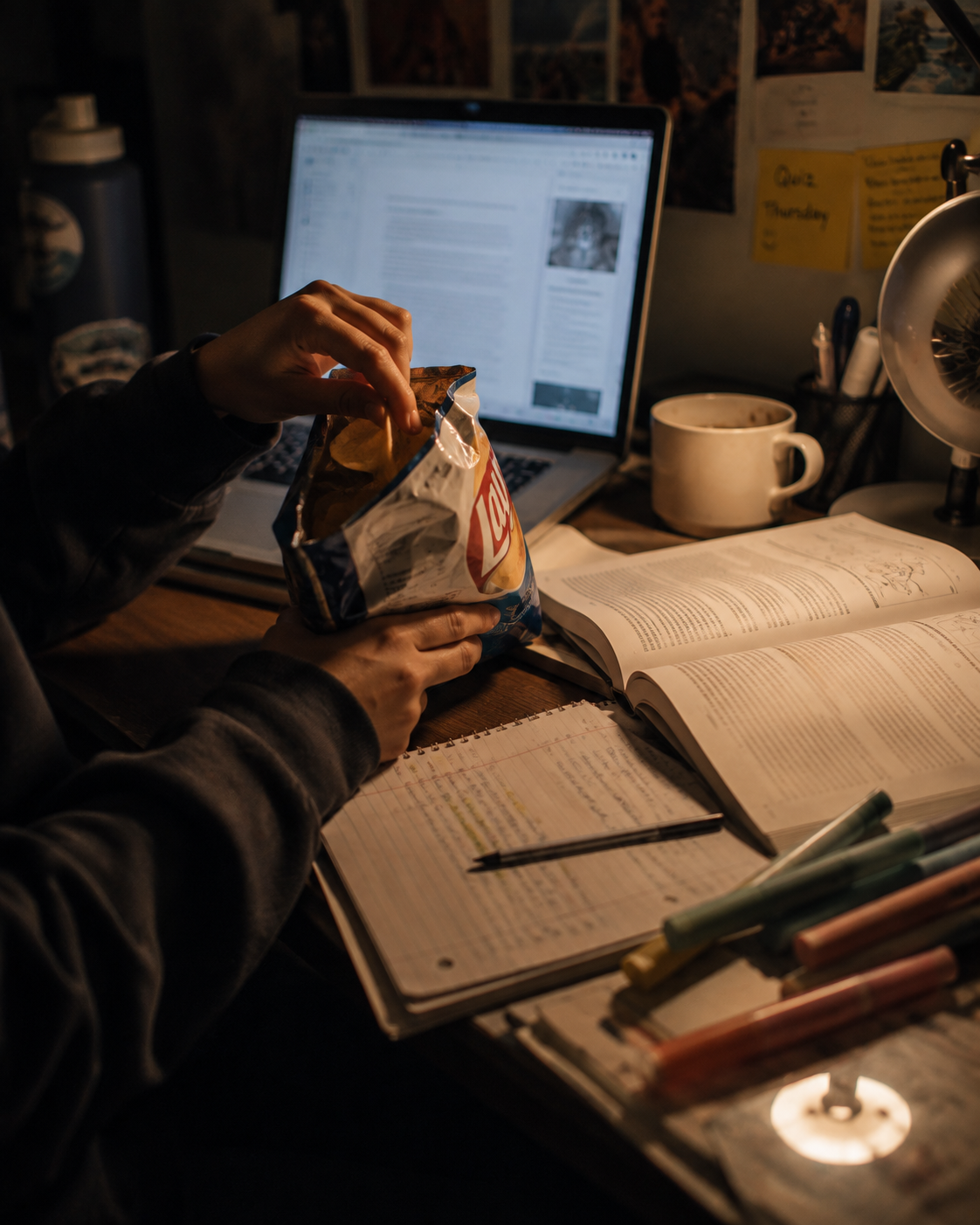
Midterm week arrives and suddenly you’re eating vending machine chips at 11pm when you haven’t touched chips in months.
This is not a willpower failure. It is a biological response, and most students spend years feeling guilty about something that is largely outside their conscious control, until they understand what’s happening.
What Stress Does to Your Body First
When your brain perceives a stressor, an exam, a conflict, a deadline, financial pressure, social anxiety, it activates the hypothalamic-pituitary-adrenal axis and releases cortisol, the primary stress hormone. Cortisol does one immediate thing: it tells your body to get energy fast, because something threatening is happening.
In the context of an actual physical threat, this makes sense. Your muscles need glucose. Your brain needs fuel. The body pulls from reserves and raises your appetite for calorie-dense food.
The problem is that your body cannot distinguish between a predator and a problem set. The same hormonal cascade fires for both. So cortisol is telling you to fuel up and store energy for a threat that isn’t going to require any running.
Why Junk Food Specifically
Cortisol doesn’t just raise general appetite. It drives cravings for specific things: sugar, fat, and salt. The reason is that these foods hit the brain’s dopamine reward system hard and fast. Dopamine is a neurotransmitter associated with pleasure and motivation, and under stress, your baseline dopamine is suppressed.
Eating high-sugar, high-fat food restores that dopamine signal temporarily. It blunts the stress perception. It gives genuine, measurable relief, which is why it works, and why the behavior keeps getting reinforced. The pattern is not imaginary. The comfort is real. That’s what makes it stick.
A 2025 meta-analysis of emotional eating and stress in college students found significant correlation between perceived stress and emotional eating behaviors, with the majority of stressed participants gravitating toward sugary foods. High-stress days were consistently associated with increased snacking compared to low-stress days.
Your brain is doing exactly what brains do. It learned that a specific action provides relief from a specific discomfort, and it keeps taking that action.
The College Version Is Its Own Category
Stress eating happens everywhere, but college creates conditions that make it harder to interrupt.
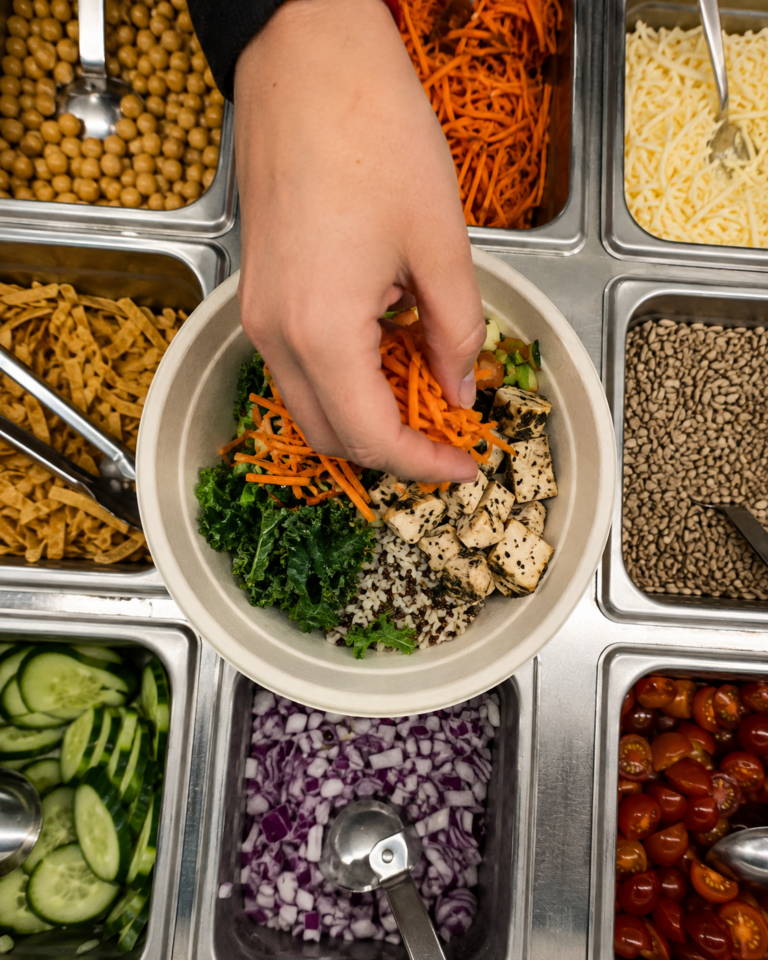
The dining hall is always open, always free at the point of use, and designed to give you the most palatable options possible, which means high-sugar, high-fat choices are the default path. There’s no friction between the craving and the food. At home, stress eating requires you to go find something. At college, it requires you to walk fifteen feet to a dessert station.
Add to that: late nights raise cortisol on their own. Sleep deprivation is independently associated with increased appetite for high-calorie food and reduced activity in the prefrontal cortex, the part of the brain responsible for self-regulation. The student staying up late because of stress is also physiologically more likely to make impulsive food choices and less equipped to override the impulse.
Then there’s the social layer. When everyone around you is stress-eating, the behavior gets normalized and reinforced. The vending machine run at midnight is a group activity. The dining hall trip after a hard exam is a ritual. You’re not just responding to your own cortisol, you’re embedded in an environment where this is what the people around you do.
Why Willpower Is the Wrong Tool
Research on self-regulation under chronic stress consistently shows that willpower is a limited cognitive resource, and stress depletes it. The more cortisol in your system, the less capacity you have for executive function, the deliberate, effortful decision-making that willpower requires.
This means the student who is most stressed is also the student who has the fewest cognitive resources available to override their cravings. The moment you need willpower most is exactly when you have the least of it. Using “just make better choices” as a strategy for stress eating is the same as using “just try harder” as a strategy for an exhausted body. It doesn’t address what’s actually driving the pattern.
What Interrupts the Pattern
What does work is reducing the cortisol signal itself, rather than trying to override it once the craving is already running.
A 10-minute delay. The dopamine craving is most intense in the first few minutes. If you can interrupt the automatic path from “I’m stressed” to “I’m eating,” even briefly, the intensity drops. Going outside, texting someone, putting the dining hall trip off by ten minutes, anything that puts time between the trigger and the behavior changes the math.
Protein at your anchor meal. Protein intake stabilizes blood sugar and dampens the cortisol spike across the day. The student who eats a protein-forward meal at least once a day consistently has lower cortisol reactivity than the student who doesn’t. This isn’t about clean eating. It’s about giving your system something to buffer the stress signal.
Magnesium. Cortisol actively depletes magnesium, and magnesium depletion makes the cortisol response more pronounced, a feedback loop that compounds under sustained stress. Most college students are already under-consuming magnesium. A supplement like Arrae’s magnesium addresses the biological side of the pattern directly rather than asking willpower to do a job it can’t do under these conditions.
Recognizing the pattern without layering guilt on top of it. This sounds soft. It isn’t. Students who understand that their stress-eating is a biological response rather than a character flaw make different choices after the fact. They don’t spiral into shame that adds more cortisol to the pile. They eat something protein-based the next time they can, and treat the episode as information rather than evidence of something wrong with them.
The Honest Expectation
You are not going to eat perfectly during exam week. That is not the goal.
The goal is to understand what’s happening well enough to stop fighting your own nervous system with a tool that doesn’t work. You’re not going to willpower your way out of a cortisol response. But you can reduce how often it fires, dampen how intense it is when it does, and stop spending emotional energy feeling bad about something your brain is doing for very old, very logical reasons.
The wellness habits that make the most difference in college, water, sleep, some time outside, work partly because they regulate the cortisol baseline directly. Stress eating is downstream of stress. When the stress signal is lower, the craving is lower. Start there.