The Summer Before College: A Three-Month Plan That Isn’t “Hang Out With Friends”
Every piece of advice about the summer before college tells you the same thing: be present, soak it up, spend time with the people you love. And that’s true. We wrote the version of that, the emotional last summer at home guide, the one about counting breakfasts and letting July be ordinary. It matters.
This isn’t that.
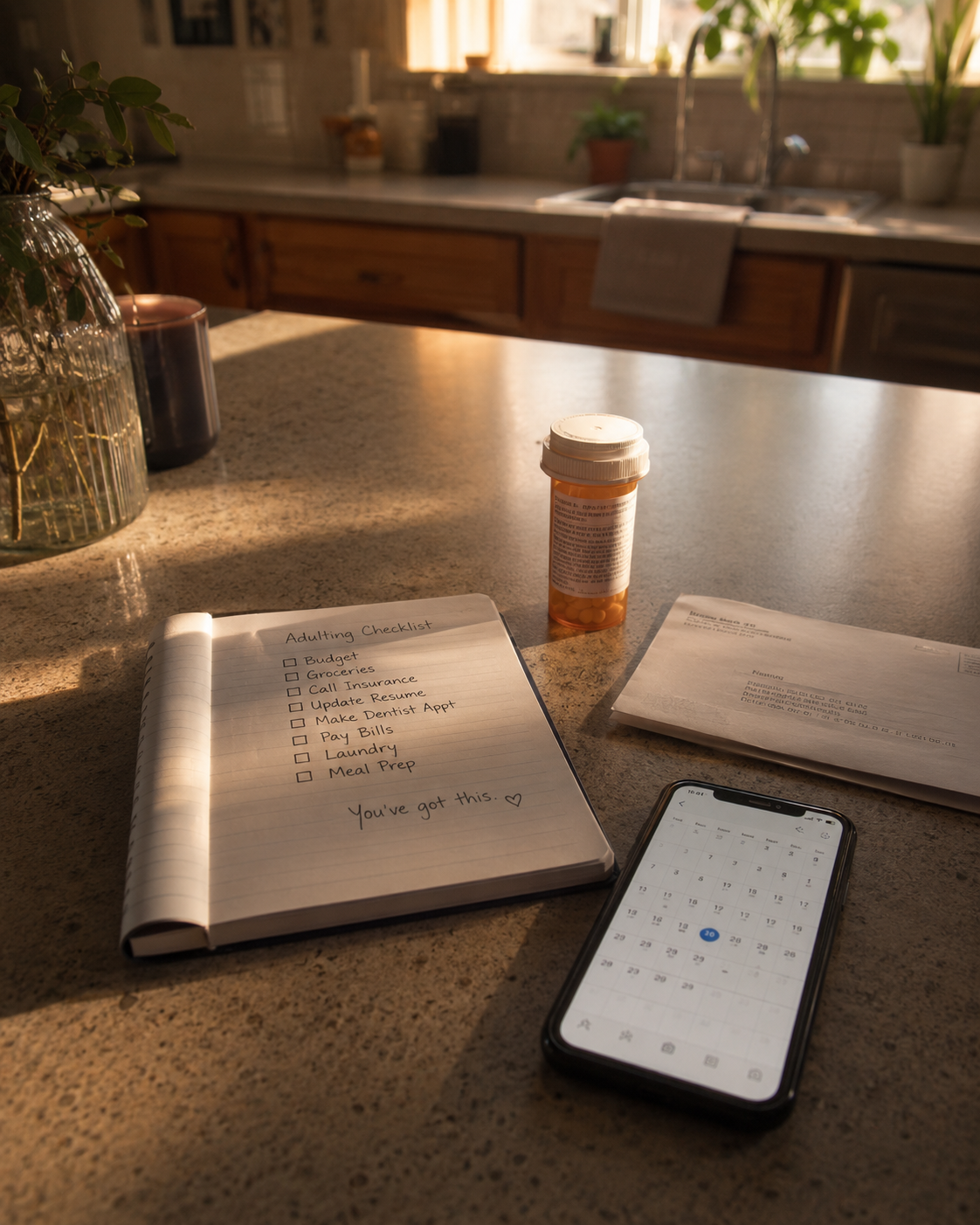
This is the other list. The one about medical forms and laundry temperatures and what to say to your parents before you leave so that the first time money gets weird, it doesn’t also have to be the first conversation about money. The practical stuff. The stuff that makes September easier.
Your Health and Medical Admin
Most students arrive on campus having never managed their own healthcare. The school’s health portal asks for information that nobody knows offhand, the insurance card is in their parents’ wallet, and the first time they get sick, they don’t know if they need to call the campus clinic or their pediatrician from home.
Fix this before August.
Get your health insurance card and understand what it covers. Know whether you’re staying on your family’s plan, switching to a student health plan, or using some combination. Know what an in-network visit costs. Know whether your school has a separate student health fee and what that buys you. This is a twenty-minute conversation to have now.
Fill out the campus health portal before move-in. Almost every school requires immunization records, emergency contacts, and basic health history before you can access campus health services. These forms exist during the summer. Do them in June, when you have your pediatrician’s number handy, instead of August, when you don’t.
Get a 90-day prescription supply before you leave. If you take any daily medication, including birth control, ADHD medication, antidepressants, allergy meds, ask your doctor now. Insurance will often cover a 90-day supply, and having three months of medication when you arrive removes a logistics problem from September, which already has enough.
Schedule anything that’s been on the list. Dentist, optometrist, dermatologist, therapist, whatever has been sitting on the to-do list while everyone was busy with senior year. These appointments are significantly easier to get at home, with your regular providers, on your parents’ insurance. Don’t wait until a problem becomes urgent.
Know your basics. Your blood type. Your allergies. The name of your primary care doctor. The campus emergency number. These are things you’ll eventually need to say out loud to someone who is not your parent.
Laundry: Actually Learning It

The dorm washer does not know that you’ve never separated whites from colors. It will not warn you. It will just quietly destroy your favorite hoodie while you watch Netflix.
Learn before you go.
Sorting matters more than people admit. Whites and light colors together, darks together, and anything red in its own load until you’ve washed it at least three times and confirmed it doesn’t bleed. Running a red t-shirt with white socks is a classic and completely avoidable mistake.
Cold water for almost everything. Hot water is for towels and bedding. Cold water is for clothes, and it prevents shrinking and color fade. Unless the tag says otherwise, default to cold.
Read the tags. The small tag sewn into the seam of your clothes has washing instructions. “Dry flat” means do not put it in the dryer. “Hand wash” means what it says. “Dry clean only” means this item is not a dorm item. Knowing this before you ruin something is better than knowing it after.
Dryer heat destroys more than the washer does. Anything with elastic (sports bras, leggings, underwear), anything delicate, anything that says “lay flat,” air dry these. High heat is for towels and jeans. Medium for most things. Check before you assume.
Treat stains before they set. A Shout stick or Tide To Go stick used within the first hour of a stain removes 90% of what would otherwise be permanent. After 24 hours in a dryer, the stain is permanent. Keep one in your bag.
Dorm laundry logistics. Most dorm machines are a shared resource. Move your clothes promptly. If someone leaves their clothes in a machine and you’ve been waiting, it is acceptable to move them to the top of the dryer. It is not acceptable to leave yours sitting for three hours and then be annoyed when someone else does the same thing.
The Money Conversations
Not having this conversation before you leave doesn’t make money less complicated. It just means the first time things get financially awkward, an unexpected expense, a card that doesn’t work, a bill nobody told you about, you’re also navigating it for the first time, and without a shared understanding of how things are supposed to work.
Have the conversation in July, before it’s urgent.
What’s covered, specifically. Tuition, room, and board: presumably handled. But what about textbooks? Supplies? A flight home for fall break? Clothes when something wears out? Toiletries? Restaurants with friends? Understand exactly where the line is, because assumptions in both directions are how resentment starts.
How transfers work. If your parents are sending money, when does it arrive and how? Venmo, Zelle, bank transfer, a weekly allowance to a student account, decide on a method now so neither of you is scrambling when rent or a book order is due.
Your own responsibility for a student credit card. A credit card in your name, used correctly, starts building your credit history before you graduate. Used incorrectly, it becomes a problem that follows you for years. The whole picture on how to handle one is in our student credit card guide if you want to go in informed.
What an emergency looks like and what it doesn’t. Agree in advance. A parking ticket is probably not a parental emergency. A health situation or a safety situation is. Knowing which calls warrant “I need help” versus which ones are yours to solve means neither of you has to make that judgment call in the middle of a stressful moment.
The Skills That Matter

These aren’t dramatic. They’re the small practical abilities that separate people who feel capable in college from people who feel constantly behind.
Cook three meals without looking anything up. Not three elaborate meals. Three anything meals that you can make from standard grocery staples. Pasta, eggs, a stir-fry. The goal is that when you’re tired and broke at 9pm on a Tuesday, you have an option that isn’t delivery or a granola bar.
Make a doctor’s appointment yourself. Call the number. Give your insurance information. Say what you need. Confirm the time. This sounds obvious and is genuinely something many 18-year-olds have never done because a parent always handled it. Practice once before you need to do it for real.
Read something before you sign it. Financial aid agreements, housing contracts, roommate agreements, anything with a signature line. You do not have to understand every clause. You do need to know what you’re agreeing to at a basic level. If something seems wrong, you’re allowed to ask.
Put things in your calendar when they’re assigned, not when they’re due. The first month of college is full of syllabus dates, orientation events, advisor appointments, and deadlines that all feel distant and then suddenly aren’t. A weekly planner or a phone calendar used consistently keeps you out of the “I forgot” situation. Start the habit before classes do.
Know how to ask for help before you need it badly. Find out where your campus counseling center is before you need it. Know your RA’s name. Identify which professor seems approachable. The students who struggle most in college aren’t the ones who hit hard moments, everyone hits hard moments, they’re the ones who waited too long to ask for help because they weren’t sure they were struggling “enough” to warrant it. You are always struggling enough to warrant it.
The Actual Summary
The summer doesn’t have to be a skills bootcamp. But two or three of these, handled in the time between graduation and move-in, will make September feel significantly less like you’re improvising your entire life.
The logistics and the packing and the room setup all come with their own instructions. This is the list underneath that list: the things you bring with you that don’t fit in a box, but matter more than most of what does.