Packing Light, Living Well: A Carry-On Edit for Students Abroad
A checked bag costs you money, costs you time at baggage claim, and costs you the ability to take the last-minute train to a city you didn’t plan to visit. A carry-on costs you nothing except the discipline of deciding what actually earns a spot in your bag before you leave.
For a summer abroad, that discipline is worth developing. You’re going to do laundry. You can buy most things you forgot. The version of you that lands in a new country and walks straight past baggage claim and out into the city is a better version of the trip. Here’s what you need to make that happen.
What Earns a Spot in the Bag
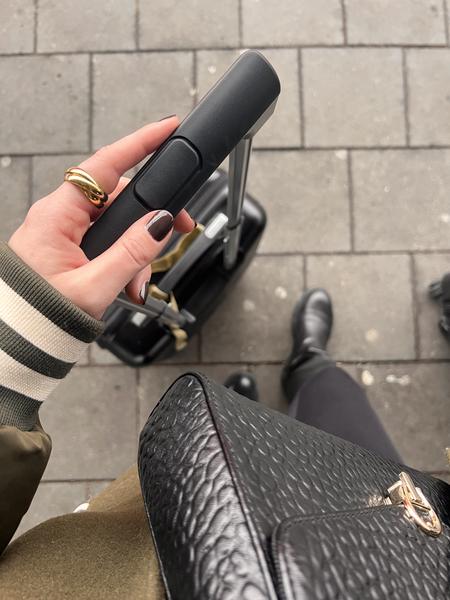
The carry-on is the whole foundation, so it’s worth getting right once and not thinking about it again. A hardshell spinner in the 21-inch range fits in every overhead bin on every major airline, meets international carry-on requirements, and holds more than it looks like it does when you pack it properly. Look for a TSA-approved lock, 360-degree spinner wheels, and a lifetime warranty, the last one matters because this bag is going to take real use. The right carry-on is the kind of purchase you make at nineteen and still have at thirty.
Compression packing cubes are what actually make the carry-on work. Without them, a 21-inch bag fills up fast and stays messy. With a full set, you compress clothes to a fraction of their original volume, every category of clothing has its own container, and unpacking at your destination takes three minutes instead of thirty. One cube for tops, one for bottoms, one for underwear and socks, that system will work in a studio sublet in Florence or a hostel bunk in Lisbon. Pack the cubes, not the chaos.
The packable tote is the piece most people forget until they need it every day. It folds flat and weighs almost nothing, which means it lives at the bottom of your carry-on until you land, and then it becomes your everything: the bag for the outdoor market, the day trip, the beach, the grocery run, the overnight train where you’d rather not drag a full suitcase. A good packable tote also serves as your personal item on the flight home when you’ve accumulated more than you left with. Get one that holds its shape when full and folds small enough to forget about when empty.
And then there’s the travel wallet: one slim piece that holds your passport, boarding passes, a few cards, and whatever local currency you’re working with. RFID-blocking keeps your card information secure in crowded transit hubs, and having one designated home for every document means you’re never patting four pockets looking for your boarding pass at the gate. This is the least exciting purchase on the list and the one you’ll reach for twenty times a day.
Everything else, the universal adapter, the TSA-approved toiletry bottles, the power bank, gets figured out once you have the system. The bag, the cubes, the tote, and the wallet are the structure that makes everything else fit.
When you land and you’re navigating the first week in a new city for the first time, the last thing you want is to be dragging more than you need. Pack once, pack right, and let the trip be the thing you carry.