Summer Travel Romance: When Is It More Than a Fling?

You met someone four days ago on a rooftop in Florence. Or a ferry to Santorini. Or a hostel common room in Prague that smelled like instant noodles and everyone’s laundry. It was three days before that, actually. You’ve already done the time zone math.
Here’s the thing about falling for someone while traveling: the feeling is completely real. Nobody’s disputing the feeling. The question is what it’s made of, and whether it survives the very specific test of being separated from the rooftop.
Everything Looks Better in Travel Light
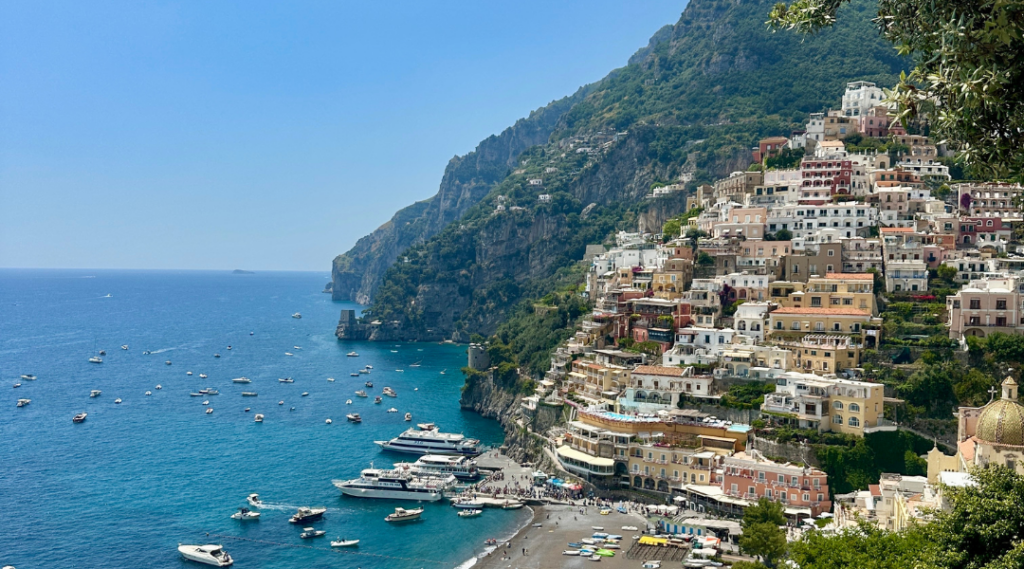
Travel has a particular quality of light. Not just literally (though golden hour in Amalfi will do things to a person’s face that a Tuesday in your campus library simply cannot), but emotionally. When you’re away from your regular life, you’re also away from your regular self. The version of you that exists in Barcelona for three weeks is less worried, more open, eating better, sleeping later, saying yes to things. That person is also you. But they’re you with the volume turned up and the anxiety turned down.
The same is true for whoever you met. They’re also operating at a heightened frequency. They’re also freer. The conversation comes easy because neither of you has the weight of your normal life pressing down on it.
None of this means the connection isn’t real. It means you’re both meeting each other in the best possible conditions.
It’s giving Love is Blind. The whole premise of that show is that the feelings in the pods are genuine, and they are. The question it’s actually asking is whether those feelings survive contact with real life: your apartment, your Tuesday, your friends, your completely unromantic grocery run.
The pod is Florence. The altar is November. The question Love is Blind has always been asking, and the one you’re asking now, is whether it’s still yes when the setting changes?
The Signs That Suggest Maybe Yes
There are a few things that tend to indicate a travel romance has more structure than the setting:
The conversations went somewhere. Not just the easy ones, the place you’re both from, the trip you’re both on, the drink you’re both holding. The ones that found something underneath that. The 2 a.m. conversation where they told you something they don’t usually tell people. Where you did the same. The locations get credit, but the two of you did the work.
They showed up when it wasn’t convenient. Not just for the good nights, the sunset boat tour, the dinner that took three hours, but for the moments that weren’t curated. The morning you were tired and a little grumpy and not performing at all. The afternoon everything went sideways and they just stayed anyway.
You’ve already talked about what comes next, and neither of you flinched. Not a plan exactly, but an acknowledgment. A willingness to figure it out. Gen Z daters are, statistically, more open to long distance than any generation before them. That’s not nothing. But the willingness has to come from both people without either one performing enthusiasm they don’t actually feel.
You want to introduce them to your actual life, not just your travel life. There’s a difference between someone who fits perfectly into the version of you that exists in Tokyo for six weeks and someone you can picture at your friend’s apartment in November, in your regular clothes, in your regular life. If the second image comes naturally, pay attention to that.
The Signs That Suggest Probably Not
And then there’s the other kind.
Everything between you has been perfect. Perfectly easy, perfectly fun, perfectly light. You’ve never been bored. You’ve never disagreed about anything. Every moment has felt like a scene.
That’s often the location. Real people are occasionally boring. They have opinions you don’t share. They have a bad day that has nothing to do with you. If you’ve never seen any of that, you may know the travel version of this person very well and the actual person not at all yet.
The future conversations get changed to a different subject. Not dramatically, just gently redirected. They’re warm and present and fully here for the next two weeks, and somehow the topic of after never quite lands. That’s useful information.
You’re already grieving the ending instead of being in the middle. If most of your mental energy is going toward what happens when the trip is over, it might be worth asking whether what you want is this specific person or the feeling of being known quickly in a place far from home. Both are valid. They’re just different things.
What to Do Either Way

If it might be real: say so. Something simple and true is enough to start. I don’t know what this is, but I’d like to find out. That’s enough to start. The rest gets figured out over time, over text, over a visit that happens because both people actually made it happen.
If it’s a beautiful fling: let it be one. A summer romance that ends when the trip ends is allowed to be exactly what it was: complete, real, and finished. That’s a full thing, not a lesser one. Some of the best things that happen to you while traveling are the ones that belong only to that place and that version of you.
The feeling was real either way. The rooftop was real. The conversation at 2 a.m. was real. Travel has a way of accelerating intimacy because you’re both operating without your usual armor, and what happens in that space is genuine even when it doesn’t become something more.
Bring that home. The openness, the willingness to say yes, the version of yourself who talked to a stranger on a ferry and meant every word. That part doesn’t have to stay in Florence.