Your Devil Wears Prada Rewatch Says More About You Than the Movie
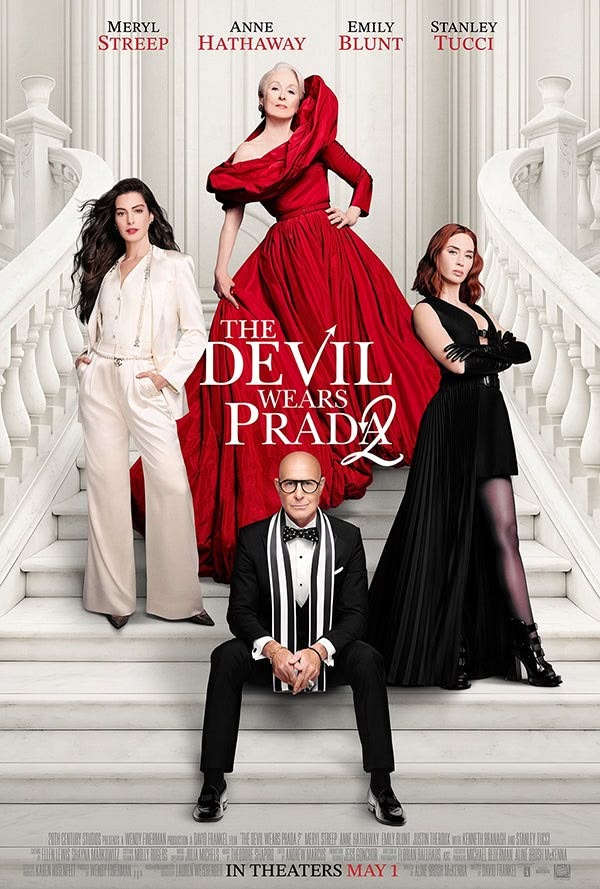
You are rewatching The Devil Wears Prada on a Tuesday night before you see the sequel (or maybe you’ve already seen it), and you want to be ready. You have seen the original… three times? Four? And you know how it ends. Andy walks away from the magazine. Miranda gets in the car, and the car drives off. The credits roll over Suddenly I See.
But somewhere around minute thirty, you notice something is off. You are not watching the movie you remember.
There are three Devil Wears Pradas. Not three movies… one movie, three viewings. Which one you are doing tonight tells you something about where you are in your life right now, and the read you bring with you to the theater is going to determine which sequel you see.
Read One: The Andy Read
You are early in something. New job, new city, new everything. You are wearing a coat you bought for the version of yourself you are about to become and you are not entirely sure you can pull it off yet.
The Andy read is the original audience read, and it lives forever inside the early-something moment. You watch Andy walk into Runway, and you wince at the cerulean monologue, not because Miranda is being mean but because you, too, have stood in a meeting and not understood the assignment. You watch Andy try and fail and try again, and you root for the makeover. When she walks away in Paris, you cheer.
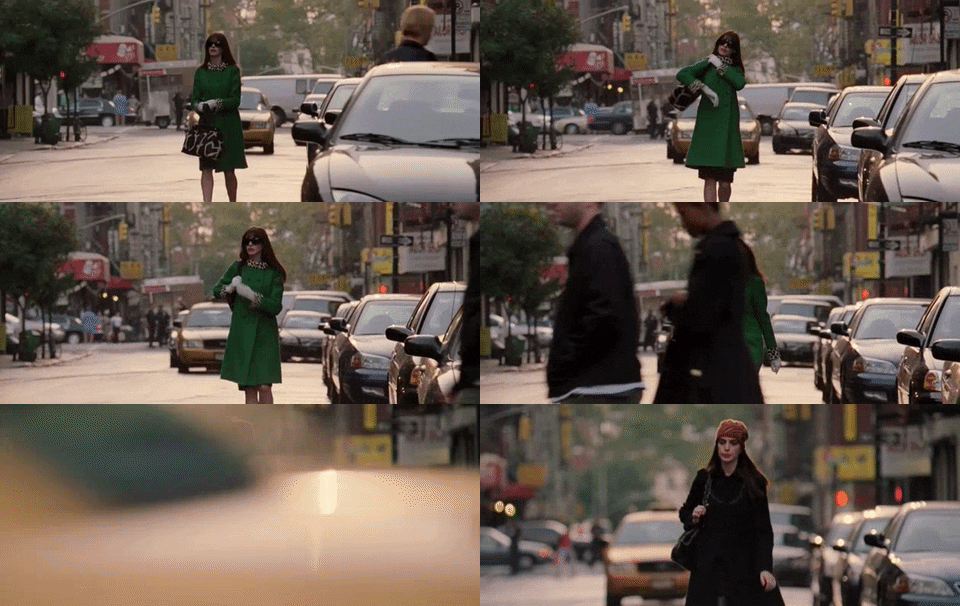
If this is the read you’re doing tonight, you are at the front of something. Your edges aren’t worn smooth yet. The world is testing you, and you are still figuring out which tests are worth passing. The Andy read is not a junior read; it is the read of a person inside a transformation. You can be 22 in the Andy read, or 47 in the Andy read. The defining quality is that you are becoming something, and the movie is showing you the version of yourself that hasn’t quite arrived.
Read Two: The Miranda Read
You have a thing to protect. A team. A project. A standard you’ve spent years defending against people who don’t see why it matters. Somebody told you recently that you are “too much,” and you have started to suspect they are right and not entirely care.
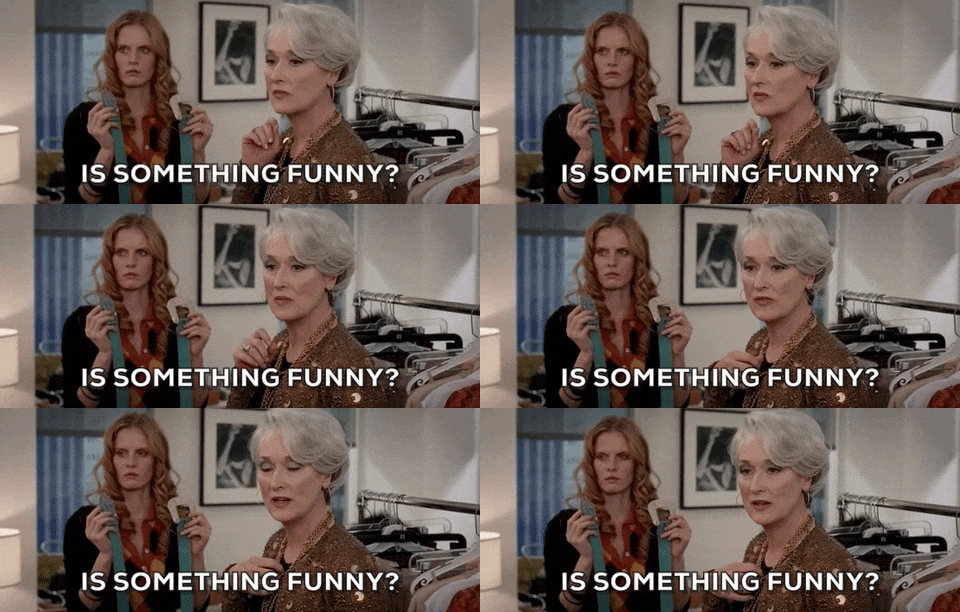
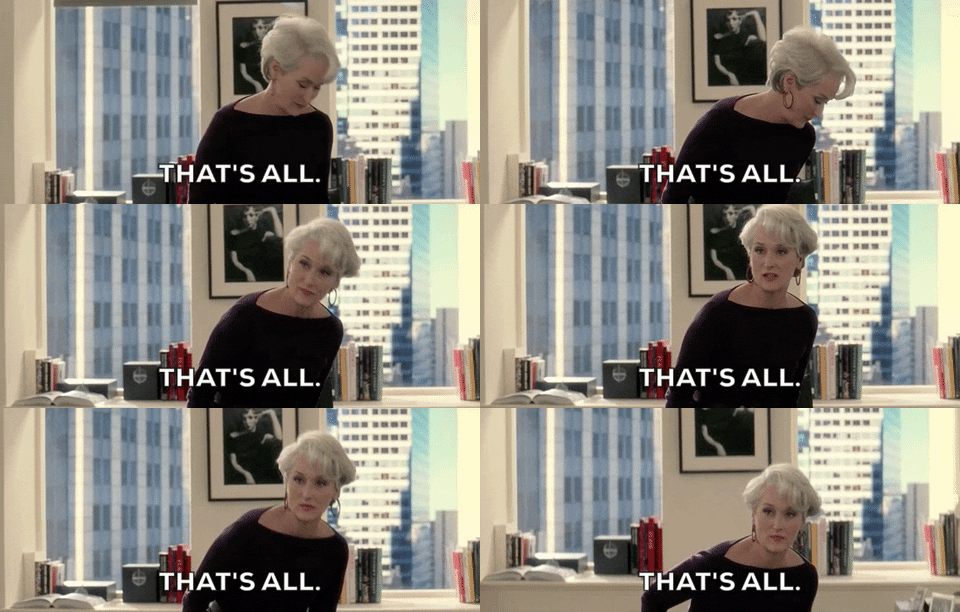
The Miranda read is the read where you stop watching the cerulean monologue as a takedown and start watching it as the truest thing in the movie. Miranda is, after all, correct. The sweater is cerulean because she said so eight years ago. The fashion industry runs on her exhausted authority. When she takes off her makeup in the Paris hotel room, the one scene where the camera lets her be tired, your chest does something it didn’t used to do. I know what that feels like.
If this is the read you’re doing tonight, you have crossed a line you didn’t notice you were near. You are no longer the person being told what to do. You are the person who has to tell other people what to do, knowing some of them will hate you for it, knowing you cannot explain yourself in the moment without giving up the authority you need to keep the thing standing. The Miranda read is the read of someone who has been chosen and is paying for it.
Read Three: The Emily Read
You have been loyal. You have memorized everything. You have done the unglamorous work nobody saw, and somebody else just got the trip to Paris.
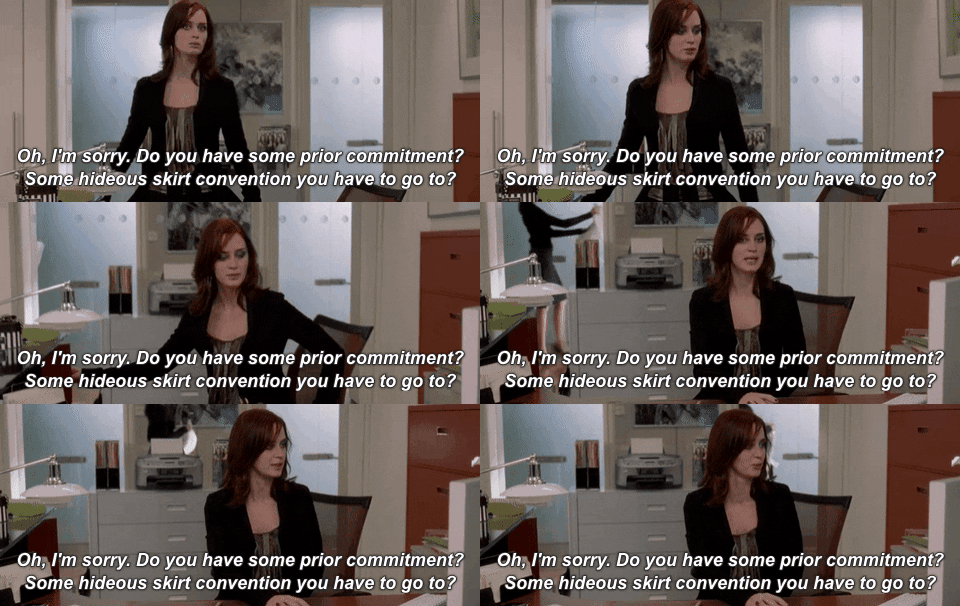
The Emily read is the quietest of the three and the most under-loved. You watch Emily Charlton track every detail of the magazine, sacrifice her body to fit a sample size, and prepare for the trip she has earned. Then you watch the trip get handed to the new girl. Emily is not bitter, she is sad, and confused, and trying to hold it together long enough to get out of the office without crying. By the end of the movie she has been hit by a car. By the end of the movie nobody asks how she is.
If this is the read you’re doing tonight, you are in a season of being passed over. Maybe at work. Maybe with a friend group. Maybe with a family member. You are clear-eyed about it; you have stopped expecting fairness; you are still showing up because that is who you are. The Emily read is the read of somebody who has paid for the privilege of staying in the room. There is honor in it. There is also exhaustion. You are not wrong to feel both.
You Might Do All Three Across a Single Devil Wears Prada Rewatch
The trick is that the reads are not exclusive. You can spend the first half of the rewatch in the Andy read and shift into the Miranda read for ninety seconds during the Paris hotel scene without noticing the switch. You can sit on the couch in the Emily read and surprise yourself by laughing at the cerulean monologue in the Miranda key. The film is built sturdily enough to hold all three at once, and the read you find yourself spending the most time in tells you which one is loudest in your life right now.
That’s the test. Not which character do you “like.” Which one are you tracking. Which one’s silence in a scene do you notice. Which one’s wins make you tear up. Whose face do you watch when nobody is speaking.
What to Bring to the Sequel
When you go see The Devil Wears Prada 2 do this: about thirty minutes in, ask yourself who you are watching. Don’t perform an answer. Just notice. Whoever your eye is following is the read you carried into the theater, and the sequel, same as the original, will hand you back a movie shaped to that read.
The answer might not be the one you’d guess. You can walk in convinced you’re in the Andy read and find your eye stuck on Miranda’s hands during the meeting scenes. You can be sure you’re past the Miranda read and feel a flash of Emily-grief at a moment that didn’t used to register. The test is honest because you can’t choose your read in advance, the movie picks it for you, and what it picks tells you the truth about right now.
There Is No Correct Read
The original Devil Wears Prada came out in June 2006, a year before the first iPhone. The clothes date. The phones date. The Sidekick Andy uses to call Miranda is now a museum piece. What ages forward, what keeps the movie watchable twenty years later, what makes a Devil Wears Prada rewatch feel different every time… is the reads. Andy and Miranda and Emily are stable; we are not. We change positions across the years and the film stays put and lets us see ourselves.
So go. Rewatch it tonight. Watch the sequel Friday. Notice who you are tracking. Tell somebody. The movie is a mirror, and twenty years in, it is still showing us back to ourselves.
Be sure to check out more of our culture coverage.